
Finding Gratitude, Grace, Healing, and Power After Bed Rest
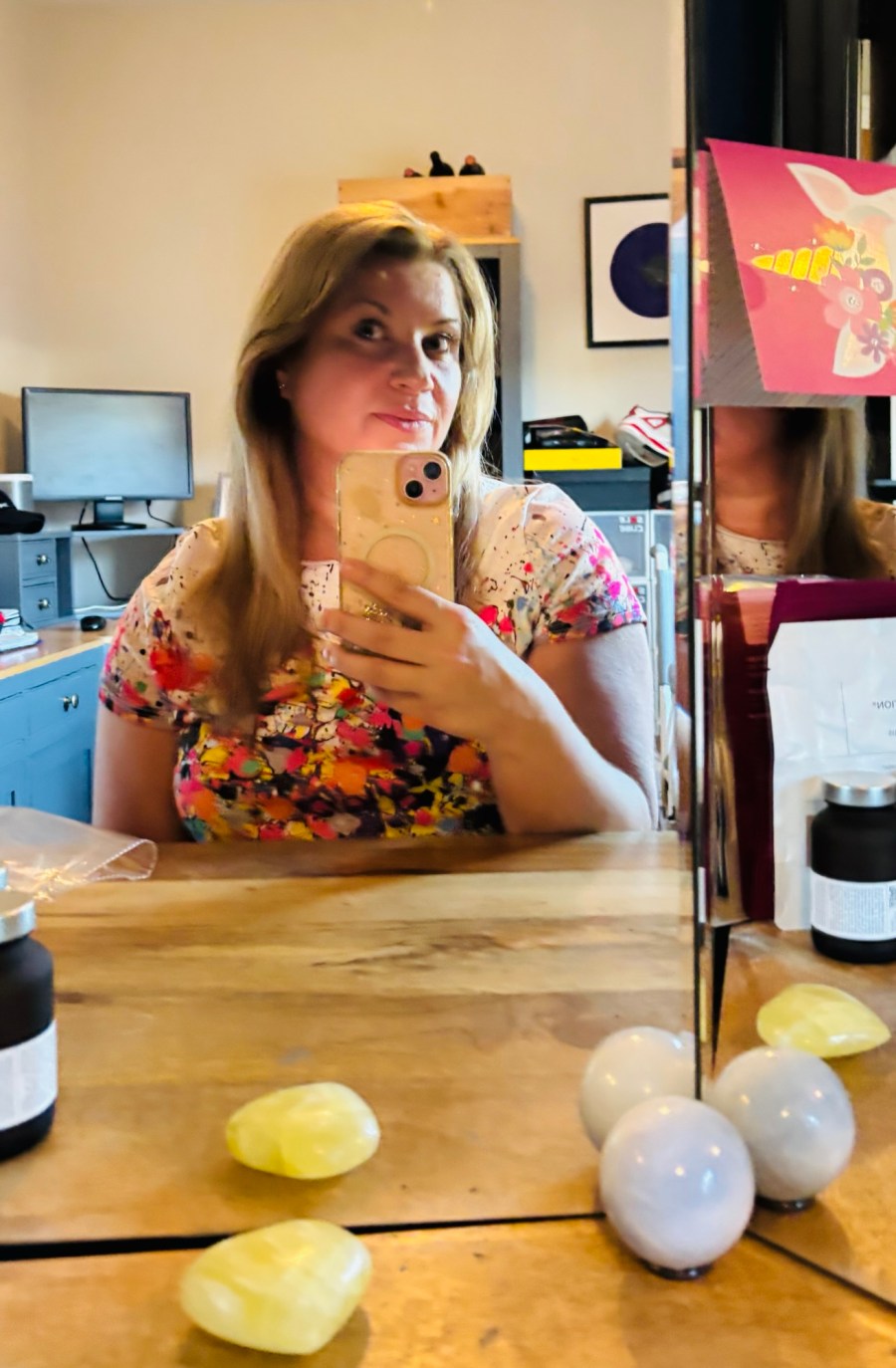
I look into the mirror every day, expecting a familiar reflection. But then a period of medical crisis hits, and suddenly, the person looking back feels like a complete stranger. If you are standing in front of your mirror right now, wondering where “you” went after months of bed rest, weight changes, and hormonal shifts, please know you are not alone.
I became paralysed in 2007. Since then, I’ve had to navigate the daily, complex realities of living with a spinal cord injury. For nearly two decades, my body has required a completely different kind of conversation. But recently, it has been through a quiet, invisible war. Passing through a massive life disruption changes your relationship with your reflection, but I am learning that it is entirely possible to find yourself again—even when progress feels painfully slow.
The Shock of the Unfamiliar Reflection
Six and a half months of forced bed rest is an extraordinary amount of time to remain completely still. When you have a spinal cord injury, immobility hits differently. Muscle mass atrophy accelerates, postural alignment shifts, and your physical presence changes.
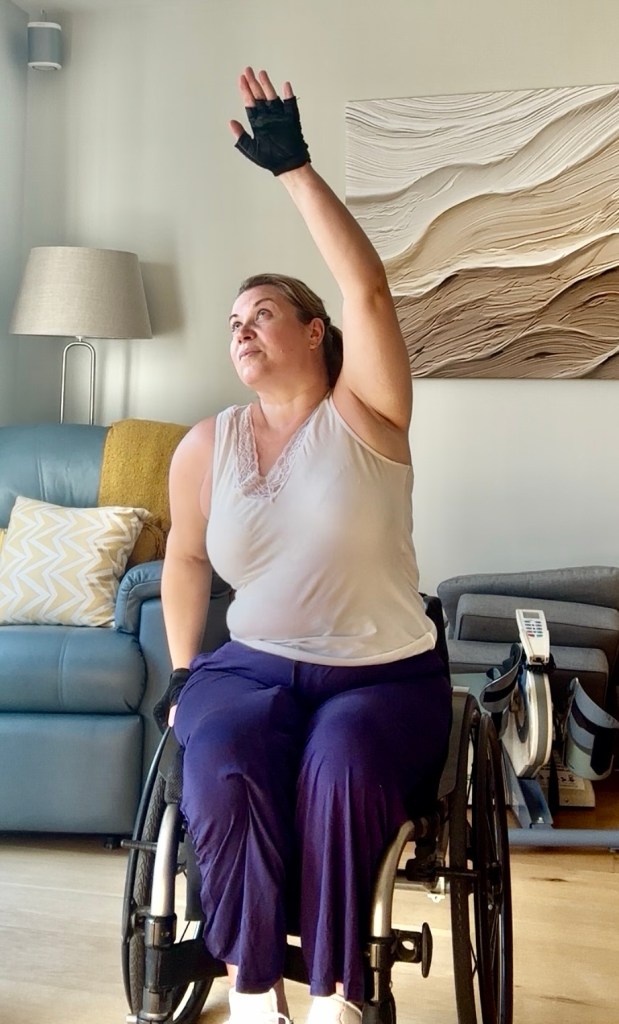
Yet, there is a strange and beautiful paradox happening right now. In some ways, the complete stillness has done something remarkable: my spine is straighter than it has ever been, and my hips are more level than they’ve ever been. But because the core and stabilising muscles that usually keep me secure have been resting for so long, I just feel a lot more wobbly around the edges. I feel physically unstable and momentarily unsure of myself in my own chair.
To add to this intense physical stagnation, I had to face a difficult paradox: increasing my food intake significantly while remaining completely flat. Eating more calories when you cannot move goes against every mainstream health narrative we are fed. Yet, it was medically necessary. My body needed immense energy to heal a pressure wound—a serious, resource-intensive, and dangerous complication for anyone with an SCI.
Between the necessary caloric surplus, the forced stillness, and the metabolic chaos of perimenopause, my body did exactly what it was supposed to do to survive. It stored energy and focused on cellular repair. But knowing that logically does not make the emotional impact of the extra pounds any easier when I look in the glass.
The Weight of the Repeated Battle
Before all this happened, I had a really good routine and chair-exercise plan in place. I was feeling strong, healthy, and completely independent in my movement. My brain remembers exactly what it feels like to be capable, functional, and structured.
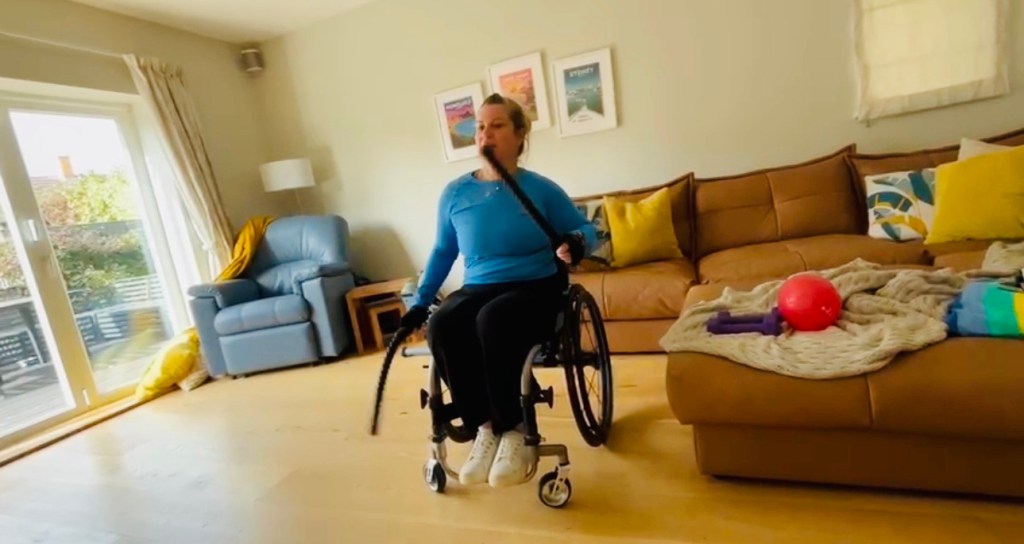
But here is the hardest truth of all: this isn’t the first time I’ve had to rebuild my body from scratch since 2007, and it probably won’t be the last.
Anyone living with long-term paralysis knows that life is a cycle of fighting for independence, hitting a medical roadblock, and being forced right back to square one. But each time it happens, it feels like it is getting harder and harder to dig deep and find the physical and mental strength to start over. The emotional tax of repetition is exhausting. When you have already done the gruelling work to get strong once, doing the exact same entry-level movements again feels less like a triumph and more like a mountain that has grown twice as tall.
Lately, I have started lowering my calories again and trying to get more movement into my day. I have even been seeing small, positive changes over the past couple of weeks that I’ve been up in my chair. But human nature makes us impatient. We all want a miracle. Some days, that memory of my past fitness fills me with excitement to get back to pushing my boundaries. Other days, looking at the massive gap between where I was and where I am now feels utterly daunting, and the mental strength to try just isn’t there.
Right now, my upright energy is capped at just four hours a day in my wheelchair. Trying to find the energy to get movement in when I still feel weak and unstable is an incredible mental and physical hurdle. Leaving the house can feel equally terrifying, and I’ve often felt too embarrassed to go out and look at myself.
Right now, a sudden miracle is not what my body needs. Slow, deliberate progress is the safest and most permanent way forward. Here is why:
- Protecting Healed Tissue: My pressure wound might be improved, but that skin and scar tissue are still incredibly fragile. Dropping calories too fast deprives the body of the building blocks it needs to keep that skin resilient against daily chair pressure.
- Managing Perimenopause Stress: This hormonal transition makes the body highly sensitive to stress. Severe calorie drops spike cortisol (the stress hormone), which actually signals the body to stubbornly hold onto weight around the midsection.
- Preserving Precious Muscle: To fix that “wobbly” feeling and regain my sitting balance, I need to keep every ounce of muscle I have. Radical dieting forces the body to burn muscle for fuel instead of fat.
Learning All Over Again: One Baby Step at a Time
The reality of this specific recovery means that even the things I took for granted after 2007 have vanished. Right now, I’m learning how to transfer in and out of my wheelchair again.
Because my body has changed shape, lost its core base, and carries extra weight, everything feels completely new. Angles that used to be second nature feel completely unfamiliar. The mechanics of my own independence have shifted, and I’m having to learn it all over again from the absolute beginning. It is a process of literal baby steps—remapping my spatial awareness, rebuilding the trust between my arms and my chair, and accepting that a basic transfer is currently a monumental physical feat.
But learning this all over again takes deep time and endless patience. Thankfully, I have that within me. I have the time, I have the patience, and I have the absolute will to conquer it all because I know exactly what kind of life I want to live on the other side of this.
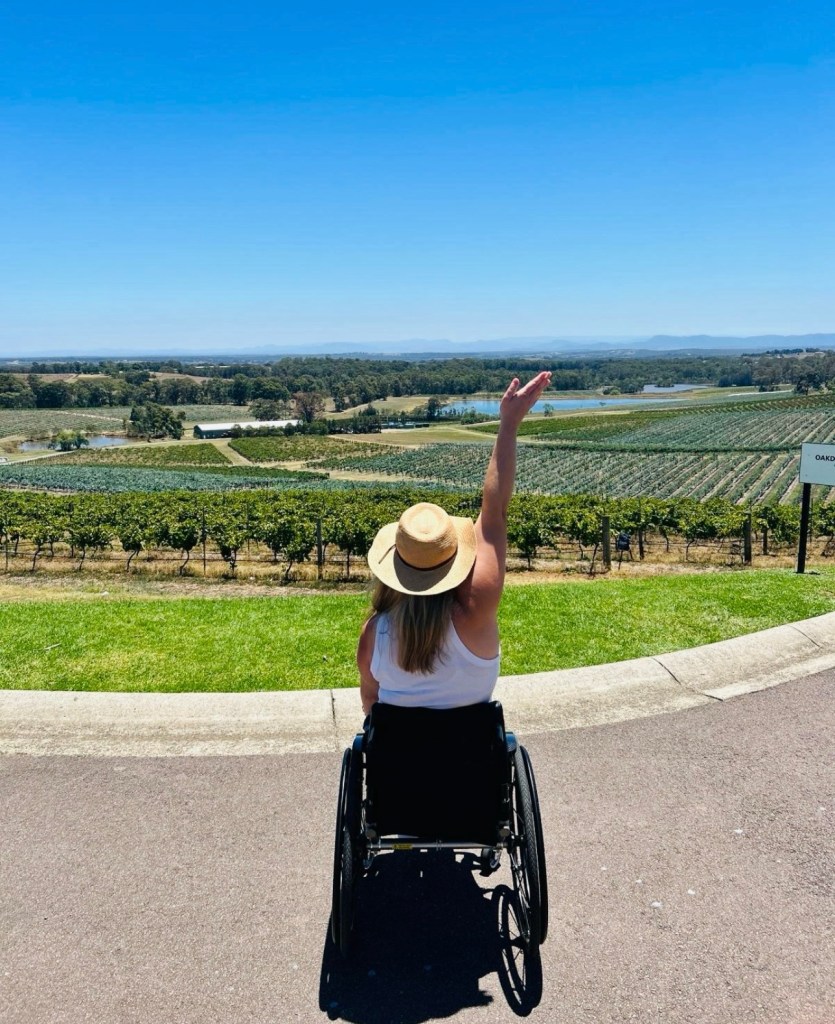
I know that this four-hour limit is temporary. With consistent effort, those four hours will increase sooner rather than later, and my world will open up once again. It will all come back over time.
The secret to transitioning back to my old fitness routine is redefining what “movement” means right now. Sitting up in my wheelchair for four hours is a workout for a body that has been flat for half a year. My nervous system and core are working overtime just to fight gravity, maintain posture, and simply master a single transfer.
On the days where everything feels daunting and the mental energy runs dry, I am using these strategies to bridge the gap safely:
- Moving Directly From My Chair: I am focusing on what is safe and accessible right now. Seated marching (using my hands to assist if needed to wake up the hip flexors), shoulder blade squeezes to reverse the bed-rest slouch, and gentle glute or core squeezes help wake up the nervous system.
- Micro-Dosing My Activity: I break my movement down into 60-second bursts scattered across my four upright hours, rather than one long, exhausting block that leaves me too drained to sit up or transfer safely.
- The 5-Minute Rule: I commit to just five minutes of gentle movement or upper-body stretching. If I still feel exhausted or overwhelmed after five minutes, I give myself full permission to lean back and rest.
Overcoming Vulnerability: Finding My Power and Purpose
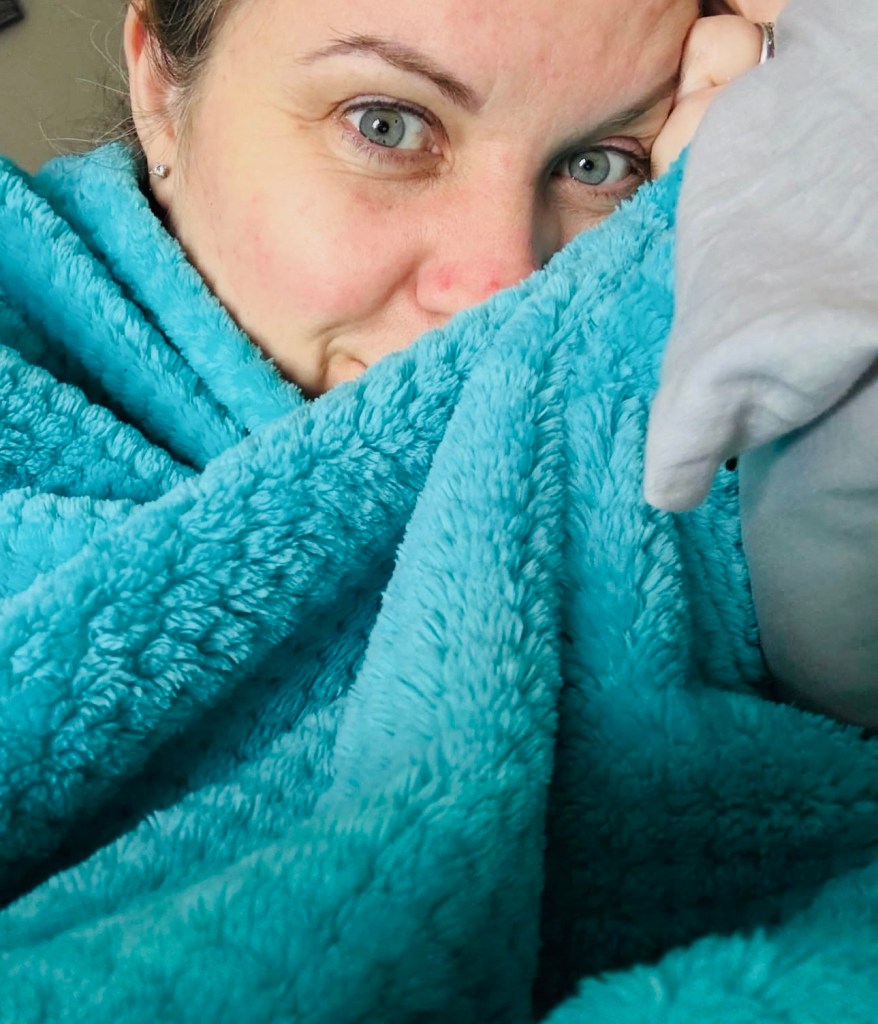
It takes a specific kind of bravery to look at a reflection you do not recognise, feel the deep sting of embarrassment, and choose to roll out of the front door anyway. For a long time, I wanted to hide. I didn’t want people to see the changes that six and a half months of bed rest, heavy healing calories, and perimenopause had etched onto my body.
It can be so incredibly easy for us to get lost in our own negative thoughts and fall into the trap of putting ourselves down. When we look at ourselves, we can see things that others don’t, and we can be extremely hard on ourselves. We notice every subtle shift in posture, every new curve, and every ounce of lost tone that a passing stranger would never even register.
When the mirror doesn’t show us what we want to see, our inner critic takes over. But we always must remember how far we have come. We have to actively stop the negative loop, offer ourselves immense kindness and grace, and be truly grateful for the body that we have and how well it has done.
The reflection I see in the mirror right now is not a permanent failure; it is a photograph of a survival period. The extra weight and changed shape are the physical evidence of a body that successfully closed a wound and protected my deeper tissues while I was vulnerable. My body prioritised keeping me alive, whole, and out of the hospital over maintaining an aesthetic ideal.
Instead of looking at the mirror with frustration, I am choosing to view it with intense gratitude for the small changes. I am learning to be deeply grateful for the small wins, like a cleaner transfer, a straighter spine, or an extra minute of steady sitting. I look at my reflection and feel gratitude for my body’s incredible ability to heal itself. It closed a severe wound while I lay still, and that is nothing short of miraculous.
I should be so incredibly proud of how far I’ve come. Surviving nearly twenty years of paralysis, beating a major medical setback, and getting back into my chair requires immense grit. When I stop focusing on what I lost in bed rest and look at the bigger picture, I am filled with a deep sense of being grateful for all that I have—the support around me, the independence I am clawing back, and the breath still in my lungs.
Knowing I am strong means taking this journey one day at a time. This path requires absolute dedication, devotion, and patience—and I am realising that I have it all within me.
When I open up about this struggle—when I share honestly about the wobbly days, the four-hour limits, the clunky transfers, and how exhausting it is to find the mental stamina to rebuild yet again—something incredible happens. The vulnerability stops feeling like a weakness and starts feeling like a superpower. By refusing to hide the reality of a spinal cord injury recovery, I am taking the power back from the mirror.
My purpose has shifted. I am no longer just a person trying to regain her old fitness routine; I am a woman showing others how to rebuild a life from the bedrock up when you are completely running on empty and learning your own body all over again.
There is immense power in a four-hour window. There is dignity in a body that fought a massive cellular battle to heal a deep wound and won. I might not know the exact shape of the woman staring back at me in the glass right now, but I know her spirit. She is resilient, she is purposeful, she has the dedication required, and she is taking her next baby step to build the life she wants.
This isn’t the first time, I’m sure it won’t be the last. But I will ALWAYS fight to find me 💪


Hey there Super Woman. Your words though intangible, reach across the ethereal realm as strong cords. I can grip them and feel connected to your strength, weakness and vulnerability.
I hear you. See you and feel you.
I’m thinking about you today and am drawing strength from you as I face my own struggle. ❤️
thank you so much for your support kind words and love. Sending love right back at you