
Living with chronic pain while navigating life in a wheelchair can frequently make you feel like a passenger in your own skin. When your baseline is physical discomfort, the world often shrinks down to the boundaries of what hurts and what doesn’t. The internal noise gets so loud that it drowns out who you actually are beneath the diagnoses.
For a long time, I thought managing my health meant fighting my body. But lately, I’ve realised that the real battle isn’t against my physical form—it’s about learning how to soothe a nervous system that is trapped in a non-stop loop of survival.
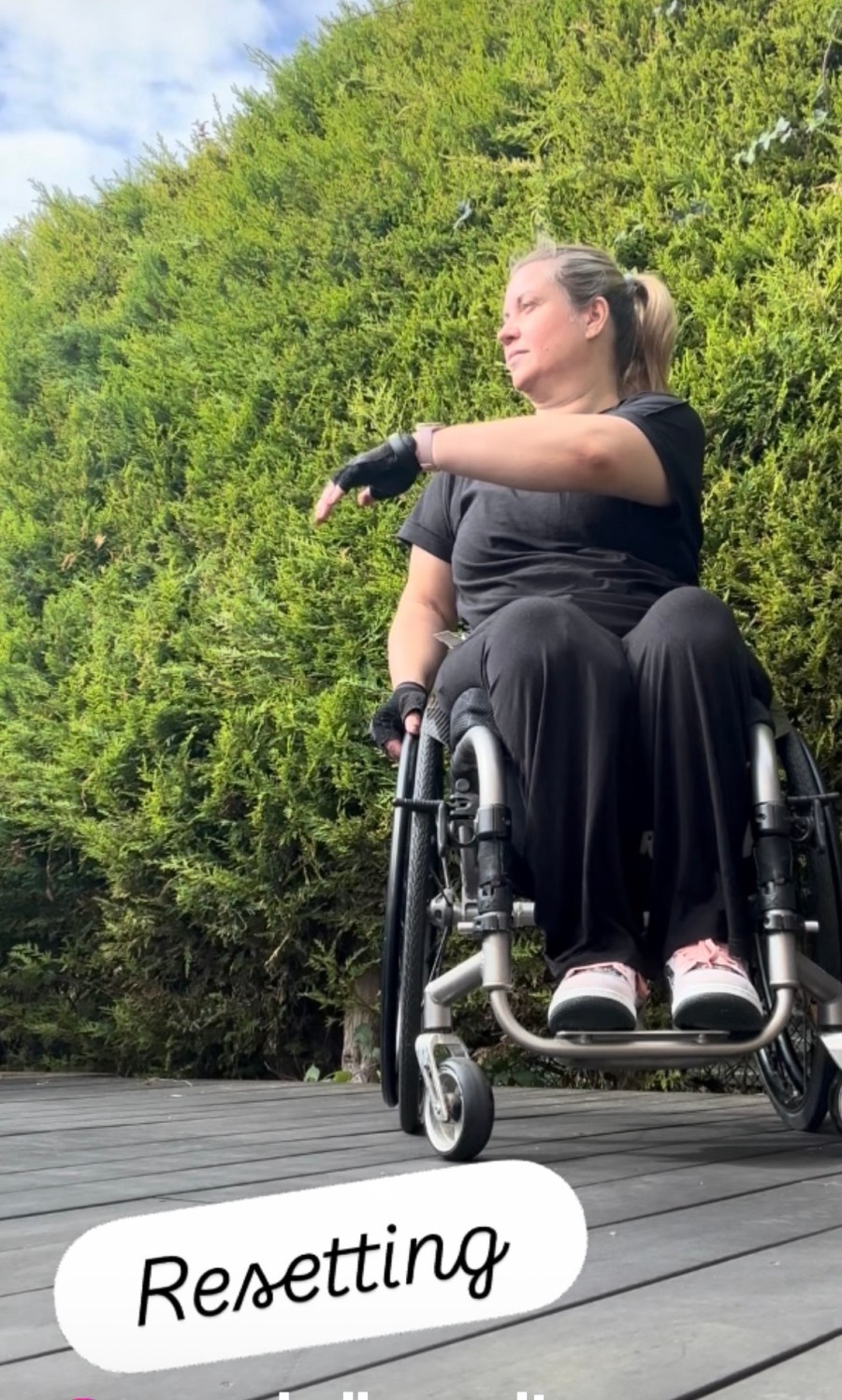
After spending six and a half gruelling months on strict bed rest, getting back out into the world has taken on an entirely new meaning. When you have been trapped within the same four walls for half a year, finally being able to get outside, feel the warmth of the sun on your face, and roll out into the fresh air is nothing short of sacred. It has become my ultimate landscape for grounding and resetting.
If you are rolling through a world not built for your comfort while trying to quiet an internal storm, this is for you. Here is how I am using nature and adaptive practices to come back home to myself and regain my power.
The Body on High Alert
Our nervous systems are beautifully designed blueprint machines. Their primary job is to keep us safe. But when you live with chronic pain, that internal alarm system gets jammed in the “ON” position. Your brain perceives the constant physical distress as an active threat, pumping out stress hormones and keeping you in a perpetual state of fight-or-flight.
Months of bed rest can amplify this hyper-vigilance. When your physical world is restricted, your mind tends to hyper-focus on every single pain signal. You can be sitting completely safe in your living room or bed, yet your chest still tightens, your breathing stays shallow, and your adrenaline spikes. Your body isn’t broken. It’s just trying to protect you based on an old, survival-driven blueprint.
When well-meaning people say “just relax,” it can feel like a slap in the face. Relaxing isn’t a simple switch you can flip when your physical reality is uncomfortable. Instead, it has to be a practice of micro-moments. It’s a conscious choice to find small pockets of softness inside the chaos.
Coming Back to Self: Four Foundational Practices
To break the pain-stress cycle, I had to stop trying to use logic to reason my way out of physical overwhelm. Your nervous system doesn’t speak the language of logic; it speaks the language of sensation. I had to find practices that met my body exactly where it is—seated, aching, and resilient.
Four foundational tools have completely changed how I coexist with my pain and reclaim my autonomy:
1. Grounding in Nature
After 6.5 months of staring at the ceiling, nature has become my primary medicine. There is something deeply regulatory about simply sitting outside. Watching the wind move through the trees, listening to the birds, and letting the actual sunshine hit my skin acts as a literal reset button for my hyper-vigilant nerves. Grounding doesn’t have to mean walking barefoot in the grass; for me, it means letting my wheels rest on the earth, taking a deep breath of fresh air, and letting nature remind my body that it is safe to down-regulate.
2. Adaptive Qigong Meditation
Movement practices can feel incredibly isolating when you use a wheelchair or are recovering from prolonged bed rest. Traditional yoga or walking meditations often don’t translate to my daily reality. That is where Qigong (“she gone”) changed everything for me.
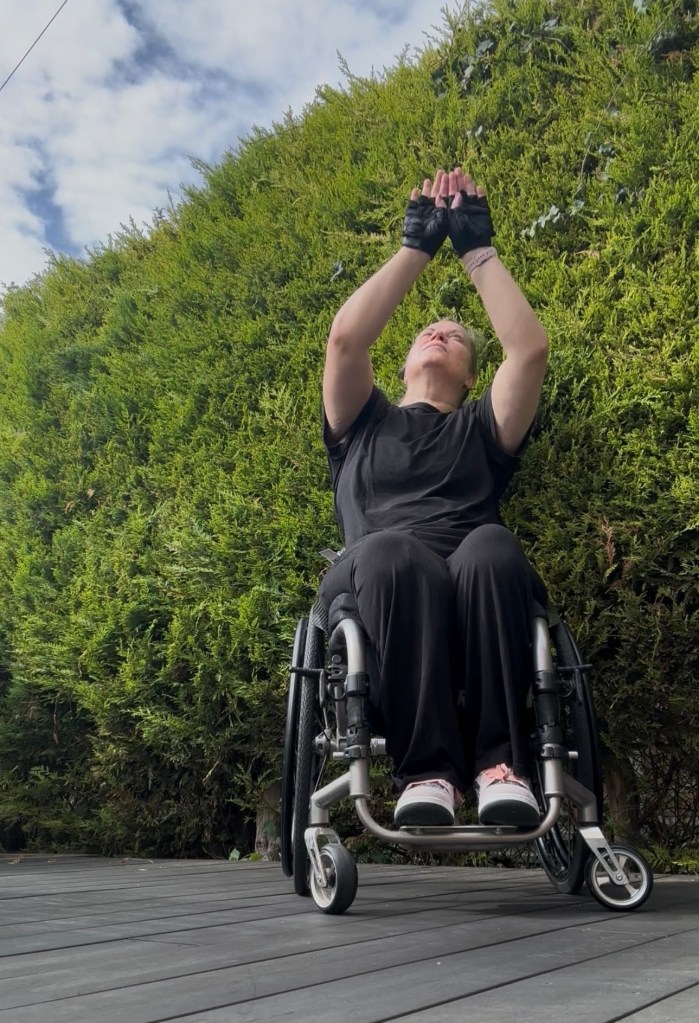
Qigong is an ancient practice focused on cultivating and balancing internal energy. The beauty of it is its absolute adaptability. Even when my joints refuse to move, my stamina is low, or my mobility is restricted, I can practise Qigong purely through visualisation and small, fluid upper-body gestures. It allows me to shift stagnant energy from those months in bed, clear emotional blocks, and feel a sense of physical agency. It reminds me that my energy can still flow beautifully, even when my physical body feels stuck.
3. Intentional Breathwork
When a pain flare hits, the first thing to go is the breath. We hold our breath, breathe shallowly into our chests, and inadvertently signal to our brain that the danger has increased.
Intentional breathwork is my most immediate anchor. By slowing down my exhalations, I send a direct message to my vagus nerve: We are okay right now. I don’t use breathwork to magically wish the pain away. I use it to create space around the pain. It gives me a focal point that the static cannot steal, ungluing my shoulders from my ears and letting me lean heavily and safely back into my chair.
4. Fierce Gratitude
Gratitude in the chronic pain community can sometimes feel toxic if it’s used to bypass our real struggles. I don’t practise toxic positivity. My gratitude is fierce, grounded, and deeply amplified by my recent time in bed.
It’s not about ignoring the wheelchair or pretending my body doesn’t ache. It is about actively looking for the beauty that exists alongside the boundary. Today, my gratitude looks like the profound appreciation for a change of scenery. It’s being thankful for the strength to sit up, the heat of the sun, and the simple privilege of being outside. By consciously acknowledging these moments of goodness, I train my nervous system to recognise that pain is not the only thing present in my reality.
Coexistence, Not a Cure
Reclaiming your power doesn’t mean finding a miraculous cure. It looks like coexistence. It means learning to gentle your mind when your body feels chaotic, and honouring the fierce resilience it takes just to exist in this space today.
Every time I breathe deeply, move my energy with intention, or look up at the sky with gratitude, I am taking a fraction of my power back from the pain. The alarms might still be going off inside my nervous system, but through these practices, I am reminding myself that I am the one holding the keys 🔑

