
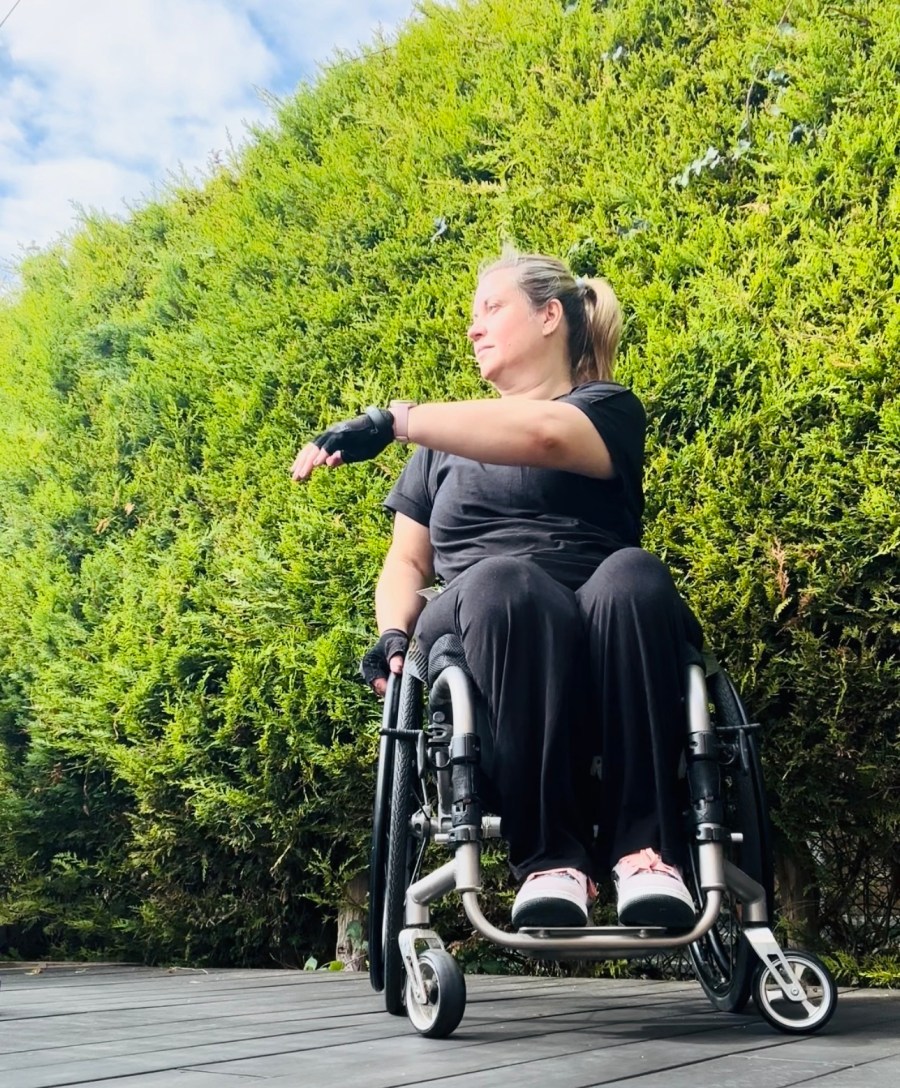
Healing after a spinal cord injury isn’t a straight line. Discover how building a daily routine of regular movement—even on the days you don’t want to—acts as a powerful catalyst to ease nerve pain, calm the mind, and build lasting strength.
The Power of Routine: My 4 Daily Fitness Non-Negotiables
When you are navigating life with a spinal cord injury (SCI), consistency is everything. It is incredibly easy for physical deconditioning and mental fatigue to creep in when we spend most of our day seated. That is why I have locked in four daily non-negotiables that I show up for every single day.
These four pillars are small, intentional habits that anchor my day:
- Daily Body Movement: Waking up my nervous system and getting my blood flowing right from the start.
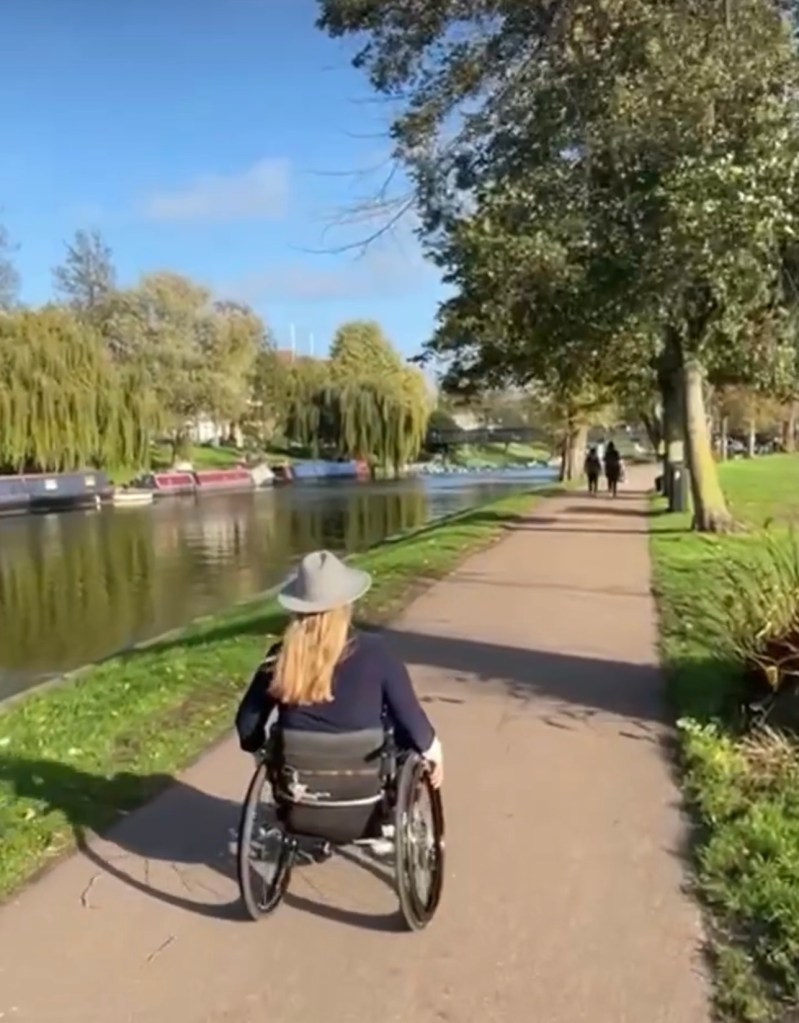
- Wheelchair Pushes: Powering through purposeful chair pushes to challenge my heart and keep my arms strong.
- Stretch and Flow: Lengthening tight muscles, releasing built-up tension, and breathing deeply.
- Core Work (Side-to-Sides): Practising side-to-side trunk rotations and bends to build better seated balance and stability.
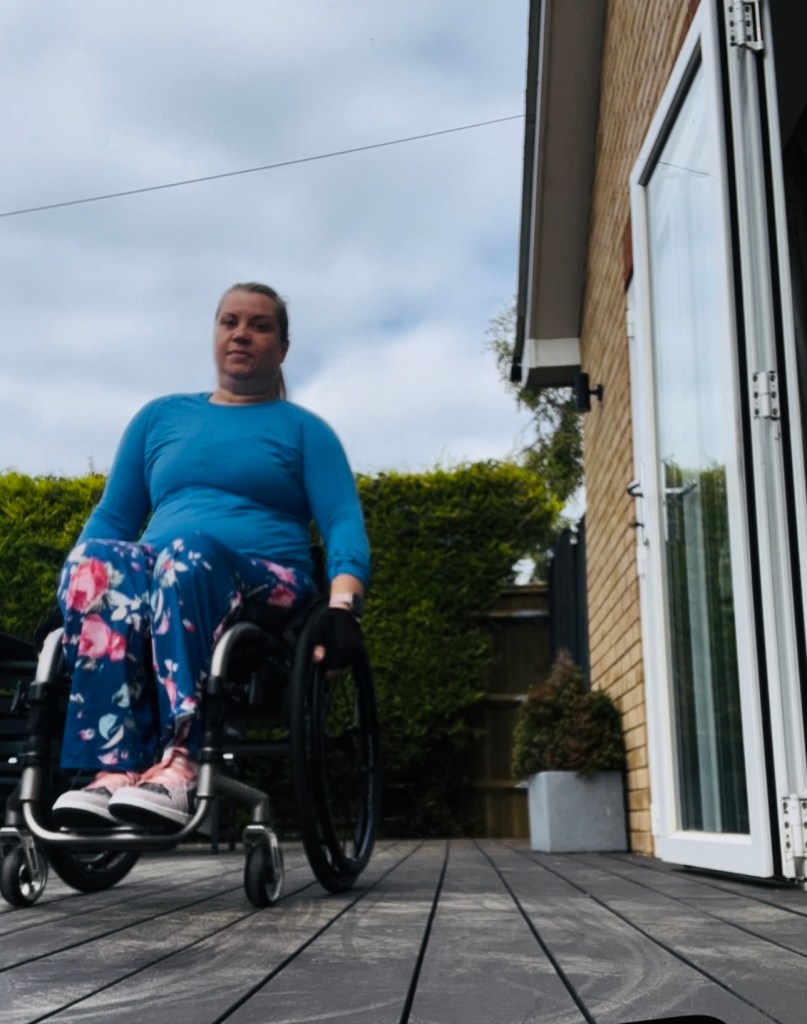
By turning these movements into automatic daily habits, I don’t have to waste mental energy deciding if I’m going to exercise. It is simply a part of who I am and how I care for myself.
Why Regular Movement is Vital After a Spinal Cord Injury
When the brain and the body stop communicating the way they used to, regular physical activity becomes your absolute best medicine. A short, daily routine is far more effective than an occasional, exhausting gym session.
Building a daily movement habit transforms both your physical health and your mental well-being in several profound ways:
1. Easing Chronic and Nerve Pain
Neurogenic pain and muscle spasms are incredibly common—and incredibly frustrating—after an SCI. Sitting in a static position for hours can cause muscles to lock up and joints to stiffen, which actually amplifies pain signals. Gentle, consistent movement like a “stretch and flow” routine signals to your nervous system that it is safe to relax. Regular stretching and movement help flush out metabolic waste from tissues, safely release spasticity, and naturally lower chronic pain levels.
2. Calming the Mind and Reducing Anxiety
An SCI is as much a mental challenge as it is a physical one. When you focus on the rhythm of your wheelchair pushes or the deliberate breath during a stretch, you are practising mindfulness in motion. Regular exercise releases endorphins—the body’s natural mood lifters. This shift lowers cortisol (the stress hormone), grounds your focus, and calms a racing or anxious mind. Routine provides a sense of predictability and control, which is deeply comforting.
3. Strengthening Your Body in Surprising Ways
You don’t need a gym full of heavy weights to build meaningful strength. Focused movements, like side-to-side seated core rotations, target your deep stabiliser muscles. Over time, this rewires neural pathways through neuroplasticity. Strengthening your remaining trunk control and upper body makes everyday transfers easier, protects your shoulders from overuse injuries, and improves your overall independence.
The Healing Path is Not Linear: Why Consistency is Key
Let’s be completely honest: the healing path is not a straight line. There will be days when your energy is high and your body cooperates beautifully. There will also be days plagued by nerve pain, exhaustion, or total mental burnout.
Here is the truth about building this habit: Sometimes, even on the days you absolutely do not want to do it, you feel so much better once you do.
Consistency doesn’t mean performing at 100% every single day. It means refusing to give up on yourself. Pushing yourself to continue on the journey—even when the progress feels slow or invisible—is where the real transformation happens. On low-energy days, your “movement” might just be 5 minutes of deep breathing and gentle side-to-side leans in bed or your chair. The magic lies in the act of showing up.
When you push through the mental resistance and choose to move, you break the cycle of stagnation. You remind your mind and body that you are still in the driver’s seat.

